

Tesla Model Y Is The Most Defective Car This Year, Germany Says
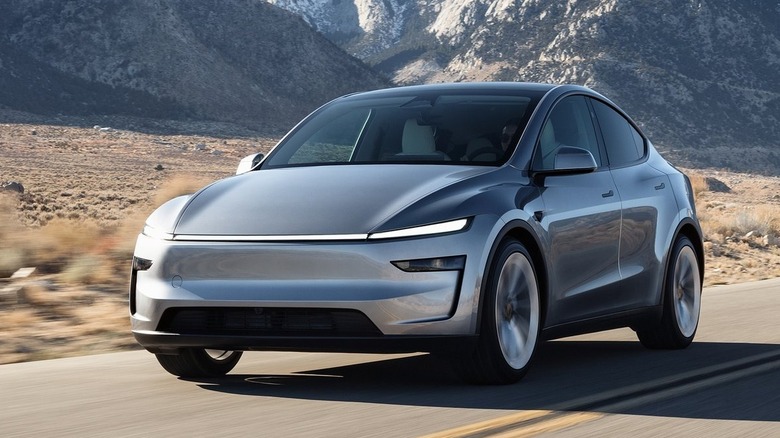
There are plenty of reasons to refuse to buy a Tesla that have nothing to do with its cars, especially in Germany, but there are also plenty of car-related reasons to avoid Teslas, too. For example, our friends at MotorTrend lived with a Tesla Model Y for two years and hated every minute of it. And that's coming from an outlet that basically had nothing but positive things to say about the Model 3 when it first came out. Now, a new report from Germany has labeled the Model Y the most defect-ridden new car you can buy. Yikes.
The report comes from TÜV SÜD, a German auditing, inspection, and certification firm, and is based on data collected from about 9.5 million vehicle inspections over the past year. Overall, TÜV found that the rate of significant faults found in the millions of inspected cars rose 0.9% year-over-year, rising to 21.5%, and while the number of cars with low significant fault rates improved by 0.8 percentage points, the number of cars without any faults dropped by 1.8 percentage points. Still, it found 66.1% of cars had no faults, and only 0.5% were deemed "not roadworthy," so things aren't as bad as they could be.
Among cars that are two or three years old, the best ones to buy, at least according to this report, are the Volkswagen T-Roc and Mercedes-Benz B-Class, which both had a defect rate of 3.0%, or the Mazda 2, which had a defect rate of 2.9%. Meanwhile, the worst cars to buy were the Tesla Model 3 (13.1%), Ford Mondeo (14.3%), and the Tesla Model Y (17.3%). The report also noted that "although the Teslas once again take up the bottom places, a positive note is that both models had driven well over 50,000 kilometers after just two to three years—an impressive mileage, particularly for an electric vehicle." So Tesla's most popular cars may be built like crap, and the CEO may be a far-right lunatic, but at least the people who still buy his cars drive them a lot.
How older cars fared
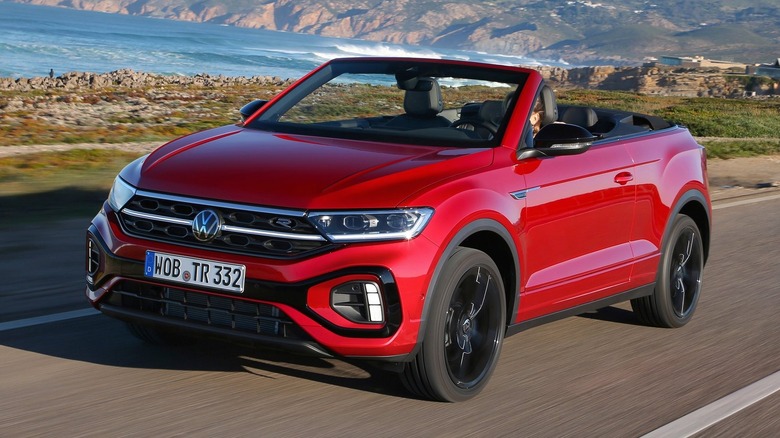
TÜV's report didn't just look at cars that were two or three years old, though. Among cars that were between four and five years old, the top spots went to the Audi Q2 (4.5%), Volkswagen T-Roc (4.0%), and Volkswagen Golf Sportsvan (4.0%), while the BMW 2 Series Active Tourer (20.6%), Tesla Model 3 (21.0%), and BMW 5/6 Series (21.5%) brought up the rear.
Moving on to six- and seven-year-old cars, the ones with the fewest defects were the same as before, only in a slightly different order — the Audi Q2 (7.5%), Volkswagen Golf Sportsvan (6.9%), and Volkswagen T-Roc (6.7%). The list of shame, meanwhile, includes the VW Sharan (21.7%), BMW 5/6 Series (22.3%), and Dacia Duster (23.5%).
The eight- and nine-year-old category shakes things up a little bit, with the best cars being the Mercedes-Benz B-Class (11.0%), Volkswagen Golf Sportsvan (10.3%), and Mazda CX-3 (9.7%). The worst were the Dacia Sandero (27.8%), Dacia Duster (29.8%), and BMW 5/6 Series (29.9%). With 10 and 11-year-old cars, the best were the Mercedes-Benz A-Class (15.4%), Mercedes-Benz GLE (15.2%), and Mercedes-Benz B-Class (13.9%), while the worst were the BMW 5/6 Series (32.1%), Renault Twingo (32.1%), and Dacia Duster (34.2%).
Wrapping things up with the oldest cars they looked at in the 11- and 12-year-old categories, the cars with the fewest defects were the Mercedes-Benz GLE (19.3%), Mercedes-Benz B-Class (19.0%), and Volkswagen Touareg (17.9%). Meanwhile, the worst were the Dacia Sandero (38.1%), Renault Twingo (40.0%), and Renault Clio (40.4%).
Now, if you live in the U.S. like most of our readers, it won't exactly help you very much to learn that the Volkswagen T-Roc did pretty well but that you should probably stay away from used Dacias. But you can definitely avoid the Tesla Model Y, as well as the Model 3. Unless you just love the idea of buying a car full of defects.